Bariatric surgery
Gastric sleeve surgery in Turkey
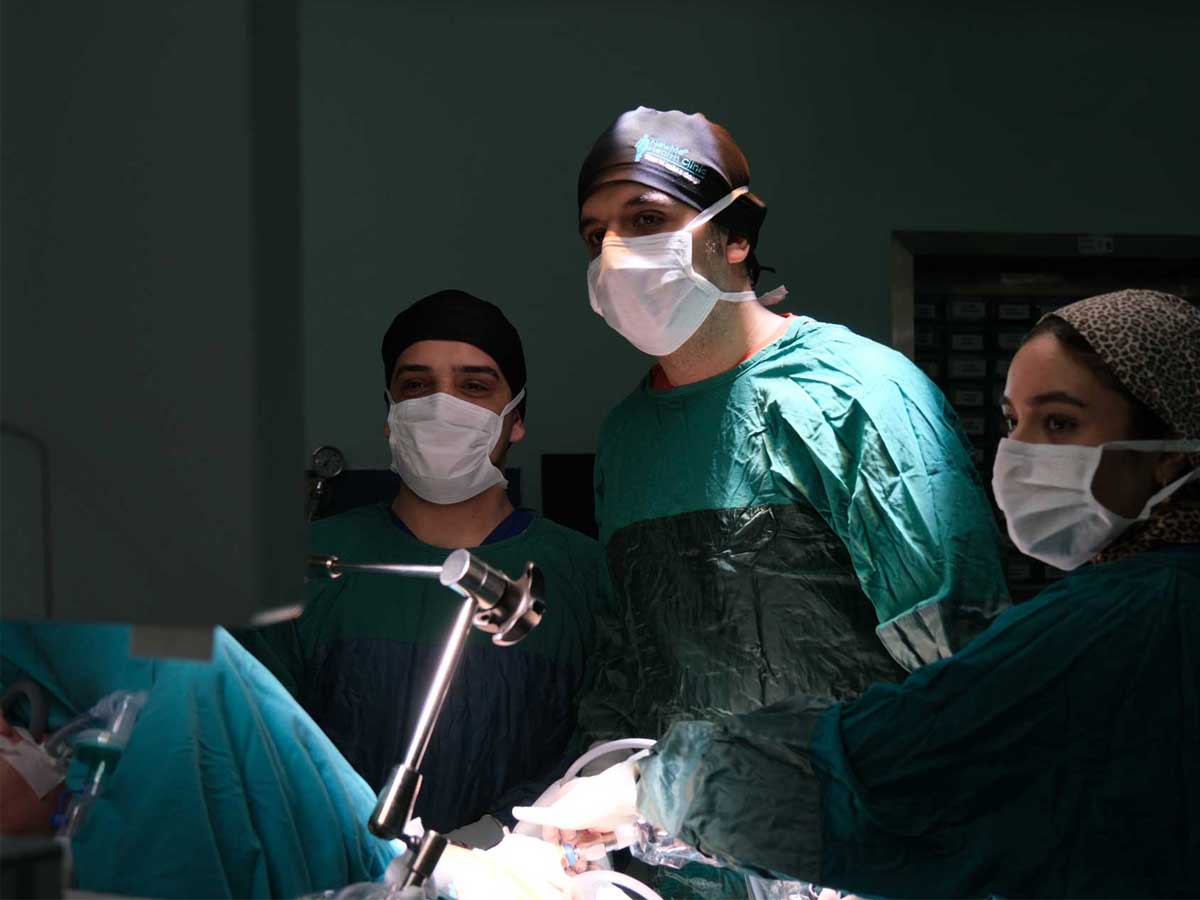
A gastric sleeve (sleeve gastrectomy) removes around 75–80% of the stomach, leaving a narrow tube that holds far less food and produces far less of the hunger hormone ghrelin. At NewMe Obesity Clinic in Antalya, the operation is performed personally by Prof Dr Nurullah Bulbuller or Dr Mani Habibi — surgeons whose own published research covers the safety of this exact procedure.
How it works
Why the sleeve works — twice over
The sleeve changes two things at once. Capacity: your new stomach holds roughly 100–150ml instead of 1–1.5 litres, so small portions genuinely satisfy you. Appetite: the removed portion of the stomach produces most of your ghrelin — the hormone that drives hunger — so cravings drop, not just portion sizes. And because the intestines are untouched (unlike a bypass), you absorb nutrients normally, with a simpler lifelong supplement routine.
This combination is why the sleeve is the most performed bariatric procedure worldwide — effective enough to transform health, simple enough to keep long-term risks low.
Is it right for you?
Suitability in one minute
The sleeve generally suits adults with a BMI of 35–50, and can be considered from BMI 30 with obesity-related conditions such as type 2 diabetes or sleep apnoea. It's usually not the first choice for patients with severe acid reflux or Barrett's oesophagus — a gastric bypass often serves them better.
Full eligibility criteria are on our bariatric surgery overview. The honest answer for your case takes one message: send your height, weight and medical history, and a surgeon — not a salesperson — reviews it.
The surgical difference
How our surgeons make the sleeve safer
Every clinic performs "the same" operation. What differs is the detail — and our surgeons have published research on exactly these details:
Dr Habibi is first author of a published technique for safer initial trocar placement — the highest-risk moment of keyhole surgery in bariatric patients.
Prof Bulbuller's comparative study of four staple-line reinforcement methods addresses the two most feared sleeve complications: bleeding and leakage.
Before the operation ends, the new sleeve is pressure-tested to confirm the staple line is sealed — a non-negotiable step in our protocol.
Dr Habibi co-authored research with the Ponderas team on managing sleeve leaks — meaning the rare complication is met with published expertise, not improvisation.
Your journey, day by day
From first message to flying home
You recover in hospital throughout your stay — with round-the-clock nursing, daily surgeon visits, and your companion welcome in your room. Here's how the week unfolds:
-
Before you travel
Free video consultation and surgeon review of your history; fixed quote in £ and surgery date; preparation guide, packing list and pre-op diet if recommended — all coordinated on WhatsApp.
-
Day 1 — Arrival
We meet you at Antalya Airport and bring you straight to the hospital. You settle into your private room, meet your coordinator, and rest before tomorrow's assessments.
-
Day 2 — Tests & meeting your surgeon
Full blood panel, ECG, chest X-ray and abdominal ultrasound, anaesthetic review — then your surgeon sits down with you in person, confirms the plan and answers everything before consent.
-
Day 3 — Surgery
The operation takes 45–60 minutes through 4–5 small incisions, with staple-line reinforcement and a leak test before closure. You wake in recovery, return to your room, and take your first short walk the same evening.
-
Days 4–5 — Hospital recovery
Clear liquids progress to protein-rich fluids; walking distance builds daily. Your surgeon reviews you every day, and nursing care continues around the clock.
-
Days 6–7 — Final checks & home
Your surgeon signs off your discharge: medications, an 8-week staged diet plan, a full English report for your GP (sick note if needed) — then a private transfer to the airport.
-
Weeks 1–8 — The staged return to food
Clear liquids → full liquids → puréed → soft → normal textures, guided stage by stage by our dietitian, with scheduled video follow-ups and a direct WhatsApp line to your team.
One coordinator, one surgeon, one WhatsApp thread — from your first message to your final follow-up. Full travel details are in our UK patient guide.
Results
What you can realistically expect
Published outcomes show patients typically lose 60–70% of their excess weight within 12–24 months of a sleeve, with rapid early loss that gradually settles. Just as important are the health changes: high rates of improvement or remission in type 2 diabetes, sleep apnoea and high blood pressure as weight falls.
And the honest part: the sleeve is a powerful tool, not a cure. Plateaus are normal. Results depend on following the nutrition plan, staying active and taking daily vitamins for life. Significant weight loss can also leave loose skin — something we discuss openly before surgery, not after.
Risks, honestly
What can go wrong — and what we do about it
General surgical risks (bleeding, infection, clots) apply as with any operation. The key sleeve-specific risk is a staple-line leak — under 1% in experienced hands. Our answer is layered: reinforcement during surgery, pressure testing before closure, daily in-hospital reviews while the early risk window passes, and surgeons whose published research covers both preventing and managing this exact complication.
If anything ever concerns you after you're home, your team is one WhatsApp message away — and we coordinate with your UK doctors when needed.
Common questions
Frequently asked questions
Is gastric sleeve surgery reversible?
No — around 75–80% of the stomach is permanently removed. That's exactly why we confirm suitability and commitment during assessment before any date is booked, and decline patients for whom the sleeve isn't appropriate.
How long does the operation take?
45–60 minutes, laparoscopically through 4–5 small incisions. With anaesthesia and preparation you're in theatre around 90 minutes, and most patients walk and sip water the same evening.
What can I eat afterwards?
A staged 8-week return: clear liquids (week 1), full liquids with protein drinks (weeks 2–3), puréed food (weeks 4–5), soft food (weeks 6–8), then normal textures in smaller, protein-first portions — each stage guided by our dietitian.
When can I go back to work?
Desk work: about 2 weeks. Physically demanding jobs: usually 4–6 weeks. We provide a sick note for your UK employer on discharge if needed.
What are the main risks?
Beyond general surgical risks, the key one is a staple-line leak — under 1% with experienced surgeons. Our staple line is reinforced and leak-tested in every operation, and our surgeons have published research on both preventing and managing leaks.
Get started
Find out if the sleeve is right for you
Send your height, weight and medical history. A surgeon reviews your case and gives you an honest answer — free, within 24 hours, no obligation.
Comparing options? See Gastric Bypass · Revision Surgery · All bariatric procedures →